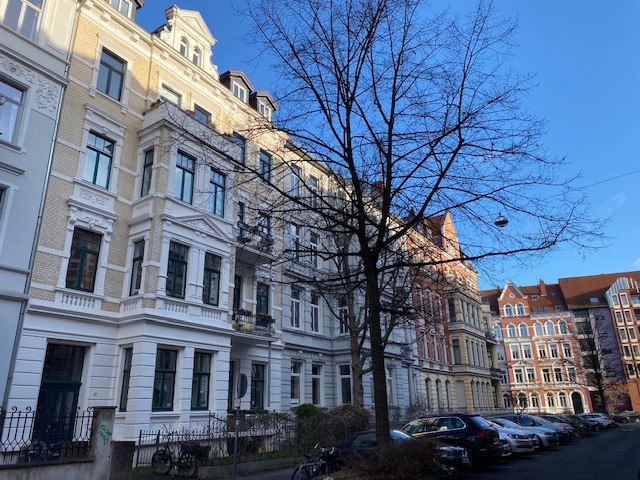
Oststadt is tree-lined streets with corner kiosks where regulars meet to smoke and share a beer. It’s brass Stolpersteine dotted throughout the neighbourhood’s pavements, small plaques that serve as a reminder of too many former residents persecuted or murdered 80 years ago. It’s playgrounds tucked between ornate historic townhouses and neighbours who help scoop inches of water from our flooded cellar when an ancient pipe bursts. The entrance to the Sedanstraße tram station, one stop away from the main train station, is 400 meters west of our Wohnung. Our favourite bakery is a three minute walk southeast. And three hundred meters east of our building’s green front door is the nearest entrance to the Eilenriede, the largest urban forest in Germany.
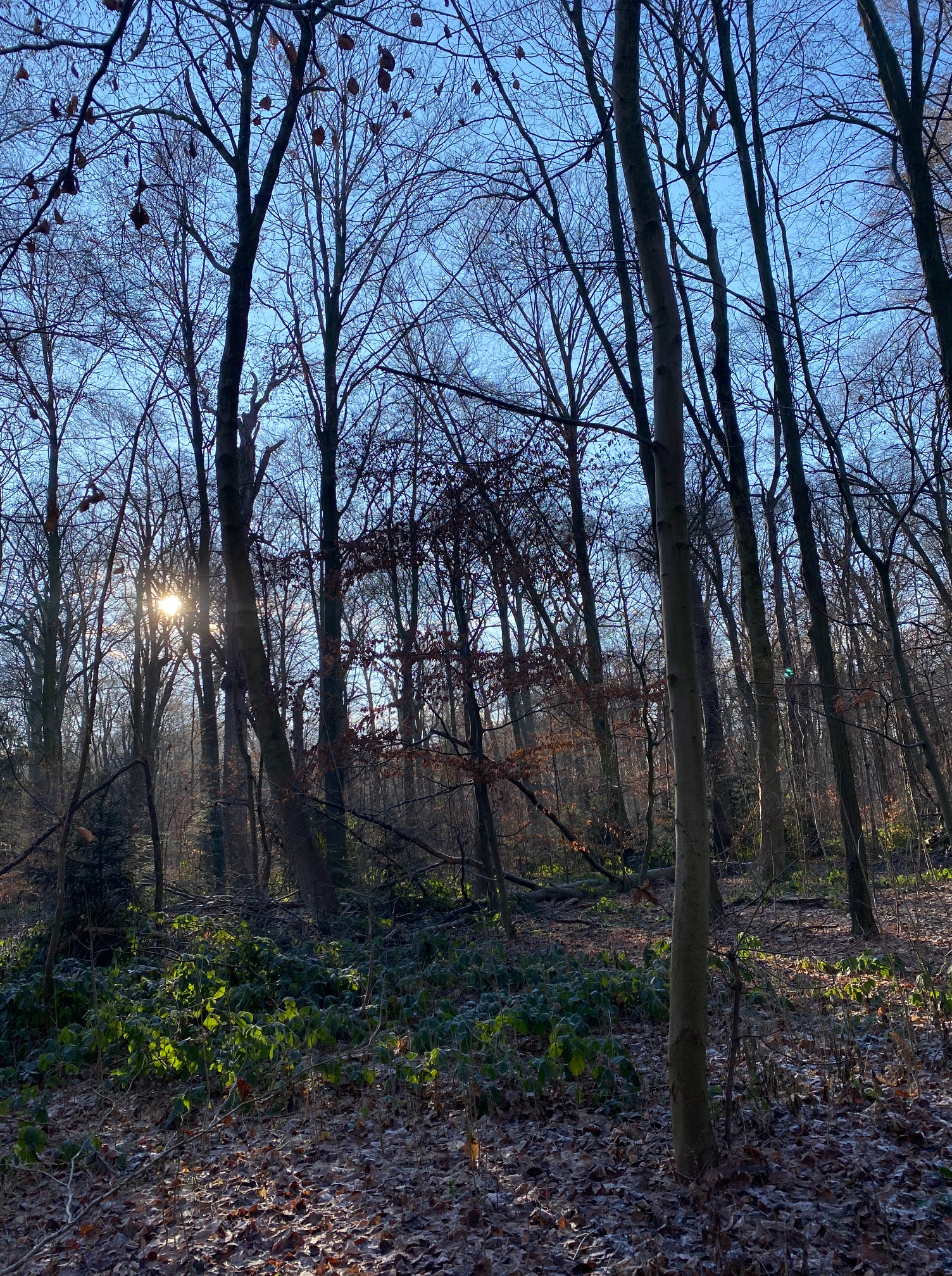
The forest was quiet, cold, and brown on Boxing Day as Malarkey and I paused beside Villa Seligmann, waiting for a lone car to pass before crossing over Hohenzollernstraße. With the imposing sandstone Neo-Baroque Jewish cultural centre behind us, we passed the equally imposing sandstone statue of Prussian field marshal Alfred Graf von Waldersee opposite, pausing again before crossing the bike path that borders the forest. A man and his two children were ahead of us: first, the older child whizzing ahead on his bike; next, the man walking; lastly, the younger child sitting astride a Laufrad. Such balance bikes are a common sight in Hannover, as are the full body Schneeanzüge that both boys were wearing and the slouchy hats perched on their heads. Afterall, in Germany, es gibt kein schlechtes Wetter, nur schlechte Kleidung. There is no bad weather, only bad clothing. Despite one child zipping ahead and another dawdling behind, the man strolled along. They turned left onto the outer Eilenriede path. Malarkey and I crossed over the path to continue further into the forest, and the man’s clear, tuneful rendition of “Rudolph the Red-Nosed Reindeer” whistled through the air.
I wondered about the song. I wondered how it translates into German and if Näse has a rhyming partner the way ‘nose’ rhymes with ‘glows.’ I thought about the exchange I’d heard between the man and his youngest, the German words I’d picked out with much more ease than I would have the previous Boxing Day. While I wondered, Malarkey wandered as far as the lead would allow him, paws crunching on the white frost that periodically iced the soft carpet of dead leaves. The path was empty, the air cold and clear, and the forest under the periwinkle sky a lot less brown than it had appeared at first glance. Mottled shades of orange mixed in with the purply-brown leaves underfoot. Yellowy-green algae climbed the bark of nearby tree trunks, and bright green moss gathered near roots here and there.
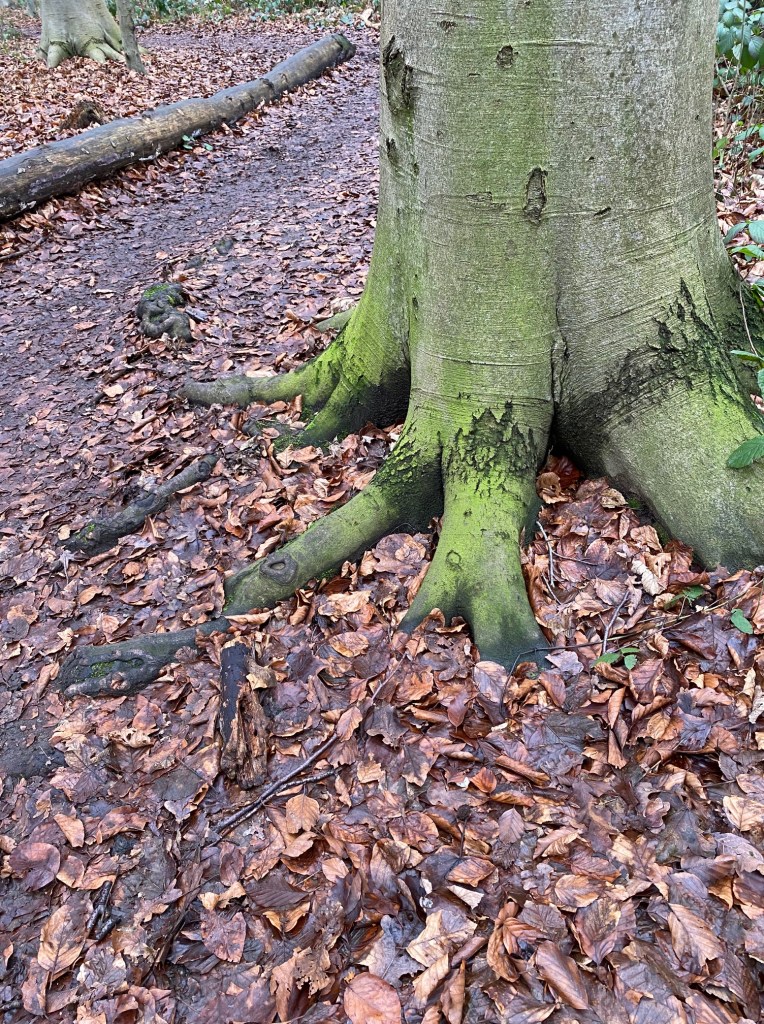
At an intersection, we turned left and continued along until an unofficial foot-trodden path slanted off to the right. I had a fleeting thought about Robert Frost’s two paths that diverged in a wood, how the narrator took the one less traveled by, how that made all the difference, and how Dan and I have forged a path that really has made all the difference for our family.
Malarkey and I veered off the main path to explore the less-traveled one, cutting through the oak and beech trees before rejoining the main path parallel to the Bernadotteallee. Here, the sun stretched its pale rays through the trees, casting long midday shadows that striped light and dark across the path. I physically felt the balance and internally recognised the need for both.
Walking through the forest at the midway point of a two-week holiday gave me time to observe and think more clearly than I can when my mind is at its capacity with the daily hurry of work and parenting. Instead of making the exhausting effort to keep up with the near-impossible demands of most weekdays or unsuccessfully digging my heels in to slow time, I strolled along.
The trail looped Malarkey and me back toward home, back toward Oststadt, back toward our tree-lined street, back toward another week of strolling, suspended in the pleasant haze of late December.
 To Palimpsest